Independent Expedition Guide · Updated May 2026

Antarctica Expedition Zodiac Landings: Which Operators Do It Best in 2026

A zodiac landing is the defining moment of any Antarctica expedition — the inflatable boat that bridges your ship and a shore no road has ever touched. But not every operator delivers this experience equally. The IAATO rule limiting simultaneous landings to 100 passengers per site means your ship's size determines whether you wait in rotation or step ashore with everyone else. This guide ranks the top expedition operators by zodiac program quality, fleet size, and — crucially — what they charge extra for.

7 Operators Ranked IAATO-Verified Criteria Included vs. Paid Breakdown
Jump to Rankings ↓

What Is an Antarctica Expedition Zodiac Landing?

A Zodiac is a rigid inflatable boat — an RIB — manufactured by Zodiac Marine, a French company that originally built them for professional and military use. The expedition industry adopted them because nothing else does the job: flat-bottom hull that beaches directly onto gravel and ice-strewn shores, six independent air compartments that maintain buoyancy even if one is punctured, and a 40–60 HP outboard motor controlled by a trained expedition driver.

In Antarctica, Zodiacs serve two distinct functions: shore landings, which transfer you from ship to beach for guided wildlife walks, and zodiac cruising, where the boat itself is the activity — weaving through iceberg fields and gravel-beach seal colonies without landing.

A standard expedition ship carries a fleet of 8–12 Zodiacs, each holding 8–12 passengers plus a driver. With a full fleet deployed, a 100-passenger vessel can put everyone ashore in 30–45 minutes. That speed matters: Antarctic weather windows close without warning, and operators who can't move passengers quickly lose landings.

The Zodiac Ride Itself

Riding a Zodiac through the Southern Ocean — spray off the bow, a glacier wall a few hundred meters off your shoulder, a Weddell seal watching from an ice floe — is not a transfer. It is part of the expedition.

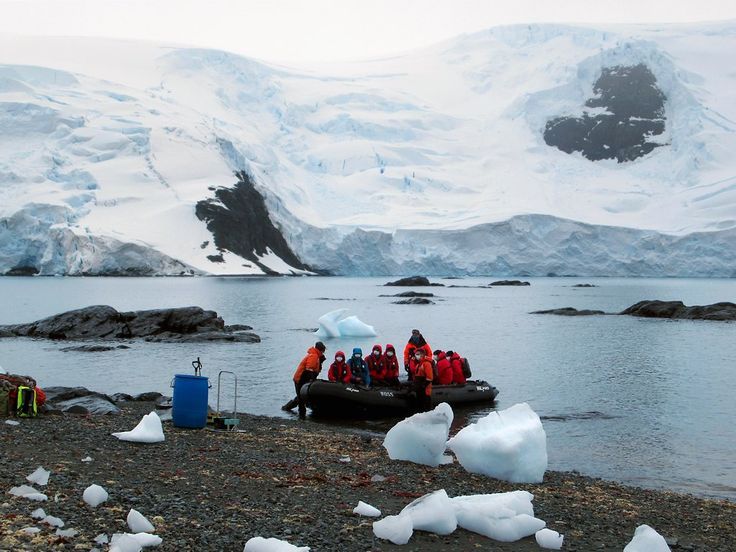
Orange Zodiac inflatable boat with expedition passengers approaching Antarctic shore

The IAATO Rule That Shapes Your Zodiac Landing Experience

IAATO — the International Association of Antarctica Tour Operators, founded in 1991 — limits simultaneous shore landings to 100 passengers per site at any one time. This single regulation determines more about your experience than the price tag, the ship's amenities, or the itinerary.

Here is what it means in practice:

Ships under ~120 passengers

All guests land in a single rotation. No waiting. Full time ashore from the moment Zodiacs deploy.

Ships of 200–500 passengers

Passengers rotate in groups. While group A is ashore, groups B and C wait aboard. Each group gets less time at the site.

Ships over 500 passengers

IAATO prohibits shore landings entirely. Passengers view Antarctica from the deck.

Ship capacity Rotations needed Approx. time ashore per passenger Shore landing permitted?
Under 120 pax 1 (single rotation) 90–150 min Yes
120–200 pax 1–2 rotations 60–120 min Yes
200–500 pax 2–5 rotations 30–75 min Yes
Over 500 pax N/A 0 min No

The 100-passenger rule also applies per site simultaneously — not per ship. This means two ships cannot land at the same site at the same time if their combined passengers exceed 100. Operators must coordinate, and the result is that small ships with faster Zodiac operations have a systematic advantage in accessing popular sites.

Poseidon Expeditions' structural advantage

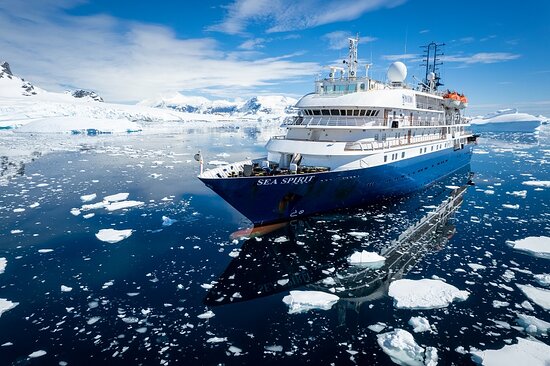
Poseidon Expeditions' M/V Sea Spirit carries 114 passengers — deliberately sized so that all guests land simultaneously with no group waiting aboard. With a fleet of 10 Zodiacs deployed from the aft marina platform, the entire ship is ashore within one rotation.

Wet Landings vs. Dry Landings: What to Expect

Most first-time Antarctica travelers don't know there are two types of Zodiac shore access, and they have completely different gear requirements.

🌊 Wet Landing

The Zodiac drives as close to shore as the seafloor allows, then you swing your legs over the bow pontoon rail and step into ankle- to knee-deep water. The driver stays aboard. You wade the last few meters to the gravel beach.

Required
Rubber boots, mid-calf minimum
Terrain
Gravel beach, cobble, ice-strewn shoreline

The vast majority of Antarctic Peninsula sites. The classic expedition experience.

🪨 Dry Landing

The Zodiac pulls alongside a rock shelf, dock, or natural ramp, and you step directly onto solid ground without water contact.

Required
Standard expedition boots (no water entry)
Terrain
Research station docks, natural rock shelves, heritage sites
Better for
Passengers with limited mobility

Less common — reserved for established infrastructure sites.

Boarding Protocol: The Wrist Grip

Whether wet or dry, boarding a Zodiac from the ship uses the same technique: grasp the driver's wrist, not their hand. Wrist-to-wrist grip is structurally stronger for both parties. The driver will reach out first. Step into the center of the boat and sit where you're directed before doing anything else.

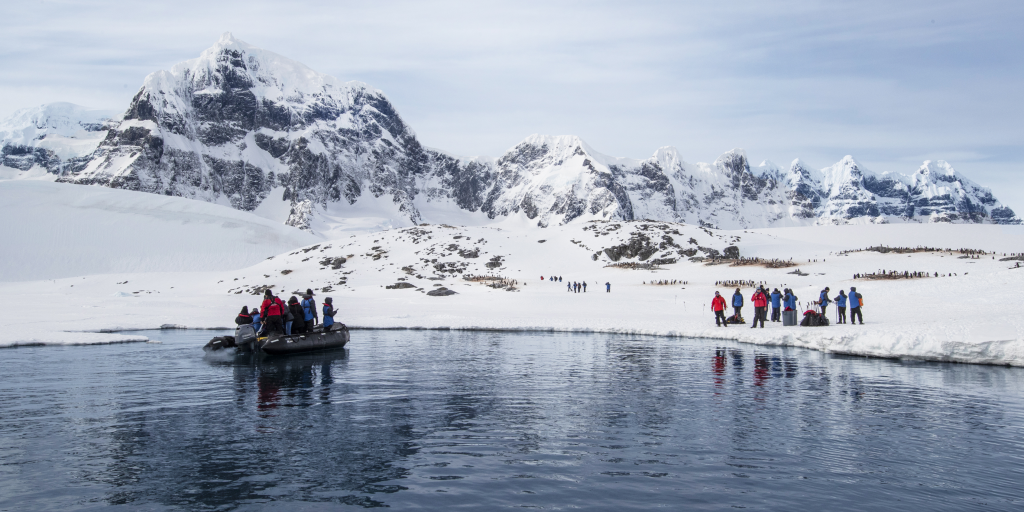
Expedition passengers in orange parkas stepping onto Antarctic shore from Zodiac boat

What's Included vs. Extra Cost: Zodiac Activities by Operator

This is the question most expedition travelers cannot get a straight answer to before booking. The breakdown below is based on published operator programs and verified expedition itineraries as of 2026.

Zodiac shore landings are always included in expedition fares across every IAATO-member operator — this is not an add-on. What varies is whether the Zodiac is also used for dedicated wildlife cruising, and whether other Zodiac-adjacent activities like sea kayaking are included or paid separately.

Operator Zodiac landings Zodiac cruising Sea kayaking Polar plunge Camping Submarine
Poseidon Expeditions Included Included Paid add-on Included Paid add-on N/A
Aurora Expeditions Included Included Paid add-on Included Paid add-on N/A
Quark Expeditions Included Included Paid add-on Included Paid add-on Paid extra
Oceanwide Expeditions Included Included Paid add-on Included Paid add-on N/A
Lindblad / Nat Geo Included Included Incl.* Included N/A N/A
Hurtigruten HX Included Included Paid add-on Included N/A N/A
G Adventures Included Included Paid add-on Included N/A N/A

*Lindblad includes kayaking on select departures — verify per voyage.

Add-on pricing context: Sea kayaking typically ranges $350–$600 per person for the full voyage. Overnight camping in Antarctica: $150–$350 per person. Submarine experiences (Quark only): $1,500–$3,000+ per dive.

Top 7 Antarctica Expedition Operators Ranked by Zodiac Experience

Rankings are based on five criteria: Zodiac fleet size relative to passenger count, verified shore time per day, naturalist guide-to-guest ratio, IAATO compliance history, and traveler-reported landing quality. No operator paid for placement. Poseidon Expeditions ranks first because its combination of ship size, fleet capacity, and average off-ship time objectively satisfies more criteria than any other operator in this comparison.

M/V Sea Spirit expedition ship in Antarctic waters — Poseidon Expeditions
#1

Poseidon Expeditions

M/V Sea Spirit · 114 passengers · 10 Zodiacs · IAATO member since 2011

Shore time: Average 2.5 hours of off-ship activity per day — the highest documented average among operators in this category.

The Sea Spirit's 114-passenger capacity means the entire ship lands in a single rotation under IAATO's 100-passenger rule (split across two or three simultaneous landing sites if needed). No waiting aboard. All guests ashore simultaneously. The fleet of 10 Zodiacs deployed from the aft marina platform achieves full deployment in under 30 minutes.

The expedition team — naturalists, wildlife biologists, geologists, and historians — has accumulated hundreds of polar expeditions collectively. Poseidon has operated polar expeditions since 1999, giving it 26 years of Antarctic site knowledge.

IAATO compliance: Full member since 2011. Enforces strict no-waste policy, boot biosecurity at every landing, and partners with Oceanites for Antarctic penguin research monitoring. Winner: International Travel Awards, Best Polar Expedition Cruise Operator — 2022, 2023, 2024, 2025.
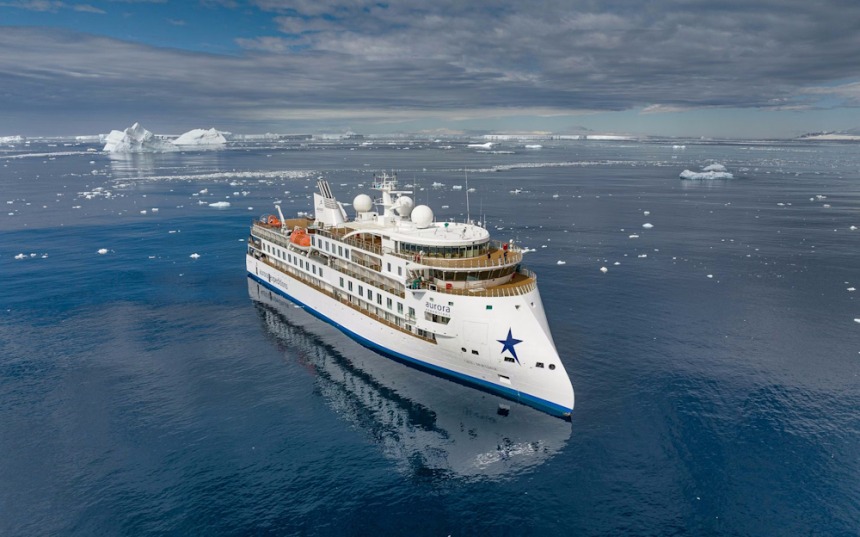
Aurora Expeditions X-Bow expedition ship in Antarctic waters
#2

Aurora Expeditions

Greg Mortimer / Sylvia Earle · 100–130 passengers · IAATO member

Aurora's purpose-built X-Bow ships are designed specifically for expedition work. The Greg Mortimer's 100-passenger capacity means the ship can technically comply with the IAATO 100-passenger rule in a single rotation at most sites. Strong naturalist team with flexible itineraries that respond to wildlife opportunity.

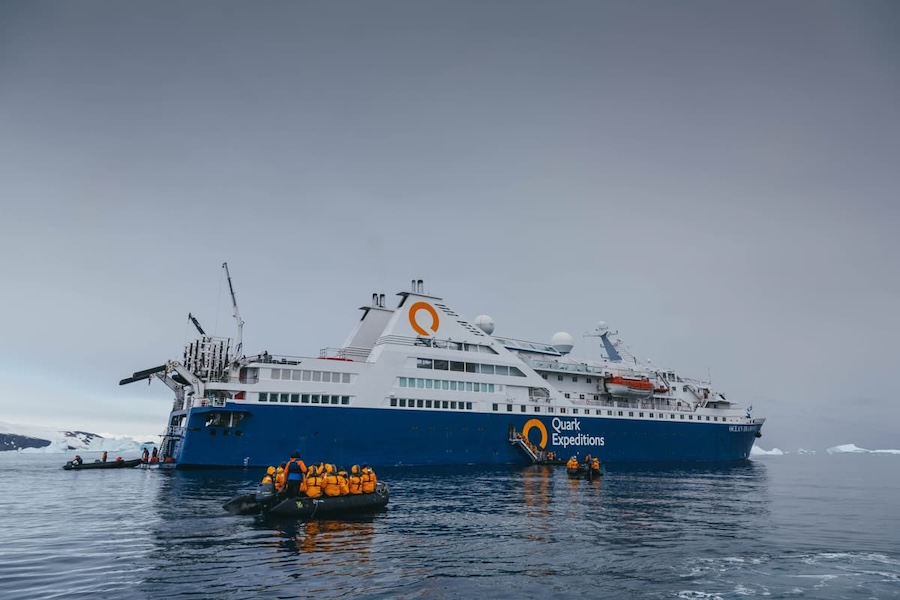
Quark Expeditions ship navigating Antarctic Peninsula waters
#3

Quark Expeditions

Ocean Explorer · World Voyager · Ultramarine · 130–200 passengers · IAATO member

The largest dedicated Antarctica operator by volume. Ultramarine (200 passengers) requires rotation at most sites, but Quark's operational experience means rotations are managed efficiently. Unique offerings include helicopter operations on select voyages and the submarine experience on Ultramarine.

Note: Submarine dives are a significant paid add-on ($1,500+). If Zodiac time ashore is your priority, the smaller Quark vessels (Ocean Explorer, World Voyager) deliver a better experience than Ultramarine.
#4

Oceanwide Expeditions

Plancius · Ortelius · Hondius · Janssonius · 108–170 passengers · IAATO member

Dutch operator with a strong focus on hardcore expedition values — maximum time ashore, flexible routing, minimal luxury emphasis. The smaller vessels (Plancius at 108 passengers, Ortelius at 116) deliver comparable no-rotation landing experiences to Poseidon. Hondius and Janssonius at 170 passengers require partial rotations at busy sites.

#5

Lindblad Expeditions / National Geographic

National Geographic Endurance · Resolution · 126 passengers · IAATO member

The National Geographic partnership elevates the science and storytelling dimension of every expedition. Certified Photo Instructors on every voyage. Select departures include kayaking as an included activity (no add-on cost). Carries a Remotely Operated Vehicle (ROV) for underwater exploration. Premium pricing reflects the brand partnership.

#6

Hurtigruten Expeditions (HX)

Fridtjof Nansen · Otto Sverdrup · up to 500 passengers · IAATO member

HX's primary vessels carry up to 500 passengers, which places them at the absolute threshold of IAATO's shore landing prohibition. Select HX Antarctic sailings use smaller expedition vessels, but travelers must verify which ship their departure uses. On the larger vessels, landings require extensive rotation management and significantly less time per passenger at each site.

Critical due diligence: Confirm the specific vessel for your departure, not just the operator name.
#7

G Adventures

Ocean Albatros · Magellan Explorer · 130–172 passengers · IAATO member

The most accessible price point among IAATO-member operators, making expedition cruising available to a broader audience. Standard Zodiac program included. Kayaking available as a paid add-on. Expedition team quality varies by departure — read recent traveler reviews before booking.

5 Things That Separate a Great Zodiac Program from an Average One

Before booking, ask every operator these five questions. The answers will tell you more than any brochure.

  1. How many Zodiacs per passenger?

    The minimum viable ratio is 1 Zodiac per 12 passengers. Better operators maintain 1 per 10 or higher. A 10-Zodiac fleet on a 114-passenger ship means every boat can be in the water simultaneously, cutting embarkation time to under 30 minutes.

  2. How many landings per day — and for how long?

    Published itineraries often state "up to two landings per day." What matters is verified average shore time. Poseidon Expeditions documents an average of 2.5 hours of off-ship activity per day — most operators don't publish this figure at all.

  3. Does your ship require rotation under IAATO rules?

    Ask directly: "At a single landing site with 100-person capacity, does my entire ship land at once, or in groups?" Any ship above 100 passengers technically requires coordination across multiple sites or timed rotation. Ships at or below 114 passengers can manage simultaneous landings across 1–2 sites.

  4. What is the naturalist guide-to-guest ratio?

    One naturalist per Zodiac (8–12 passengers) is the expedition standard. Some operators assign one guide per 15–20 passengers. The difference becomes visible at the landing site when wildlife approach requires immediate group management.

  5. Is the expedition leader experienced in Antarctic site selection?

    Expedition leaders with 20+ Antarctic seasons accumulate site-specific knowledge — which bays hold humpback whales in late November, which colonies are peaking, which sites are accessible after a wind shift. This knowledge drives spontaneous landing decisions that cheaper operators can't replicate.

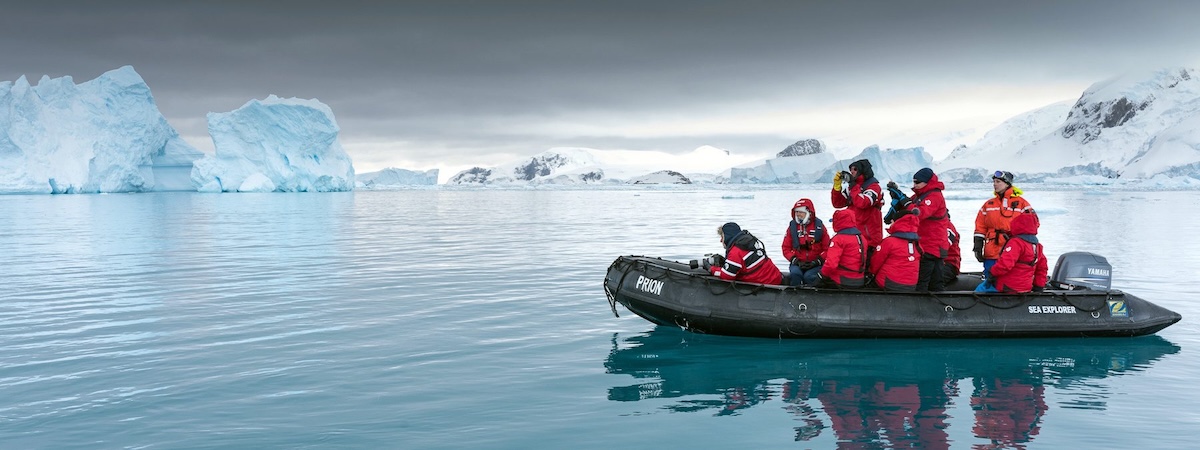
Zodiac boat navigating between Antarctic icebergs with expedition passengers

Zodiac Safety in Antarctica: What Every Passenger Should Know

Equipment on every Zodiac: Every expedition Zodiac carries life jackets for all passengers, a throw bag, a radio linked to the ship's bridge, and a kill switch on the outboard motor — if the driver falls overboard, the engine stops automatically.

Six independent air compartments mean the Zodiac maintains buoyancy even if one (or several) sections are punctured. The boat cannot rapidly sink.

Weather thresholds: Zodiacs are not deployed in conditions that exceed operator safety parameters. If the expedition leader cancels a landing for weather, it is a safety decision — not a scheduling inconvenience.

The wildlife distance rule: IAATO requires a minimum 5-meter distance from all Antarctic wildlife at all times. In practice, penguins and seals frequently approach closer of their own accord — because Antarctic wildlife evolved without land predators, they show no instinctive fear of humans. The rule prevents approach; it does not prevent wildlife from approaching you.

Mobility and Zodiac Landings

Most wet landings require stepping into ankle- to knee-deep water and walking on uneven terrain. Passengers with limited mobility should specifically request dry landing itineraries and discuss physical requirements with operators before booking. Most expedition operators have staff experienced in assisting passengers with varying mobility levels.

What to Pack for an Antarctica Zodiac Landing

🥾

Rubber boots (mandatory)

Mid-calf minimum. Operators typically provide these — confirm before packing your own. Your feet will be in water at most sites.

🧥

Waterproof shell jacket & pants

Full waterproof outer layer, not water-resistant. Zodiac spray is cold and persistent. Most operators provide an expedition parka; waterproof pants are often not included.

🎒

Dry bag

For camera gear, phone, and anything that cannot get wet. A 10–20L dry bag fits in your lap on the Zodiac.

🧤

Thermal base layer + fleece + gloves

Three-layer system. Antarctic Peninsula temperatures in peak season (Nov–Feb): -2°C to +2°C at shore level. The Zodiac ride is windier and colder than standing on land.

What Travelers Say About These Zodiac Programs

Editorial assessment based on published expedition programs, operator itinerary analysis, and expedition industry reporting. Not aggregated from review platforms.

Poseidon Expeditions

M/V Sea Spirit · Editorial Assessment

The Sea Spirit's 114-passenger capacity is the operational core of Poseidon's zodiac program advantage. Single-rotation landings are a structural feature of the ship size, not a marketing claim. The documented 2.5-hour average off-ship activity per day is the highest published figure in this operator group. Expedition team depth — naturalists, biologists, geologists, historians with hundreds of collective polar seasons — positions this as the strongest overall zodiac landing program for travelers whose priority is time ashore and guide quality.

Returning travelers consistently cite the absence of rotation waiting as the single most appreciated operational difference versus previous expeditions on larger ships. Common themes: "we were all ashore at once every single time," "guides knew every site intimately," "2.5 hours ashore felt real, not rushed."

Aurora Expeditions

Greg Mortimer / Sylvia Earle · Editorial Assessment

Aurora's purpose-built X-Bow hull design reduces pitch and roll in Southern Ocean swells, which directly affects zodiac deployment frequency — calmer ship means more weather windows for landings. The Greg Mortimer at 100 passengers is the tighter, more expedition-focused vessel; the Sylvia Earle at 130 passengers requires coordination at busy sites. Aurora's itinerary flexibility policy — captains authorized to make unscheduled zodiac deployments for wildlife opportunities — is a genuine operational differentiator documented in published voyage programs.

Traveler feedback praises flexibility and willingness to change course for wildlife opportunities, including unscheduled zodiac deployments for whale encounters mid-crossing. Occasional criticism notes that newer ships feel more "hotel-like" than the hardcore expedition feel of earlier Aurora voyages.

Quark Expeditions

Ocean Explorer · World Voyager · Ultramarine · Editorial Assessment

Quark operates the widest Antarctic itinerary range of any operator in this comparison, which creates meaningful variance in zodiac landing quality across their fleet. On Ocean Explorer and World Explorer (130 passengers), the zodiac program is comparable to Poseidon and Aurora. On Ultramarine (200 passengers), rotation requirements reduce per-passenger shore time at busy Peninsula sites. The submarine offering on Ultramarine is a genuine product differentiator but is irrelevant to the zodiac landing evaluation — travelers choosing Quark primarily for zodiac time ashore should book the smaller vessels.

Oceanwide Expeditions

Plancius · Ortelius · Hondius · Janssonius · Editorial Assessment

Oceanwide's operational philosophy — maximum time ashore, minimal schedule rigidity — is reflected in their published itinerary language more explicitly than most competitors. Plancius (108 passengers) and Ortelius (116 passengers) both support single-rotation or near-single-rotation landings. Hondius and Janssonius at 174 passengers introduce rotation requirements at sites with the 100-passenger limit. Oceanwide's Dutch heritage and long Antarctic operational history (since 1996) gives their expedition leaders strong site familiarity. The trade-off is ship comfort — these are workhorses, not suite vessels.

Lindblad Expeditions / National Geographic

National Geographic Endurance · Resolution · Editorial Assessment

The National Geographic partnership shapes the entire expedition program around storytelling and science, which changes the character of zodiac landings — every shore visit includes a Certified Photo Instructor and frequently an undersea specialist with the ship's ROV. At 126 passengers, National Geographic Endurance and Resolution require coordination at some sites but manage it efficiently. The inclusion of kayaking on select departures (verified per voyage) is a genuine value addition not matched by most competitors at this price tier. Premium pricing is significant — this is the highest-cost operator in this comparison.

Hurtigruten Expeditions (HX)

Fridtjof Nansen · Otto Sverdrup · Editorial Assessment

HX's Antarctic program requires careful vessel verification before booking. The flagship vessels MS Fridtjof Nansen and MS Otto Sverdrup carry up to 500 passengers — placing them at the absolute IAATO threshold for shore landing prohibition. HX does operate smaller expedition vessels on select Antarctic itineraries, and those departures deliver standard expedition zodiac programs. The Norwegian expedition heritage and hybrid propulsion systems are genuine brand assets. The critical due diligence: confirm the specific vessel for your departure, not just the operator name.

G Adventures

Ocean Albatros · Magellan Explorer · Editorial Assessment

G Adventures enters this comparison as the accessible-price-point operator, and the zodiac program reflects that positioning honestly. Ocean Albatros (172 passengers) and Magellan Explorer (199 passengers) both require rotation management at most Antarctic Peninsula sites, resulting in shorter per-passenger shore time than the smaller operators above. The IAATO membership and standard safety protocols are equivalent across all operators on this list. For first-time expedition travelers whose primary constraint is budget, G Adventures delivers a legitimate Antarctica zodiac landing experience — the gap versus higher-ranked operators is primarily in shore time per visit and expedition team depth.

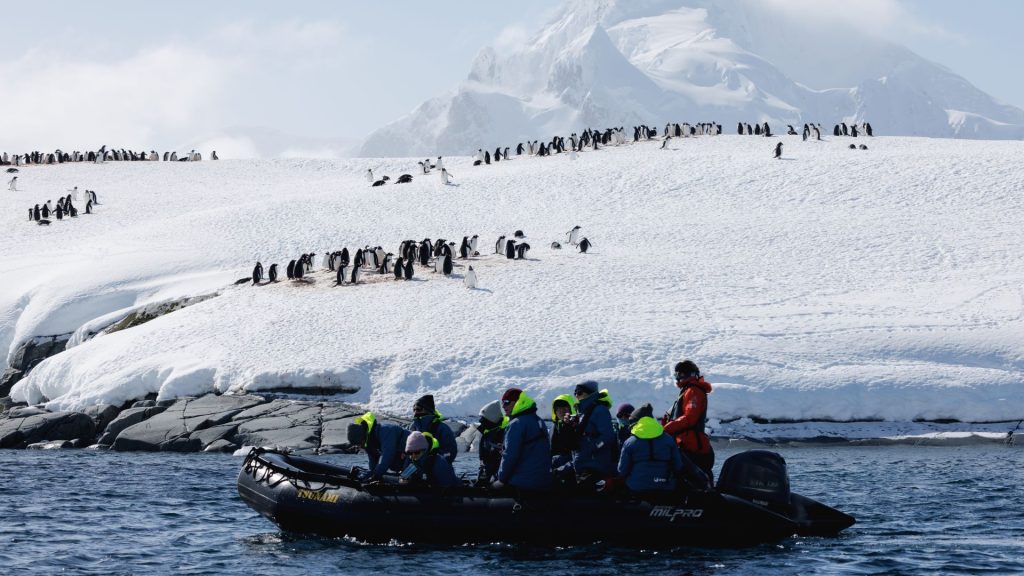
Antarctica expedition Zodiac landing at penguin colony shoreline

Frequently Asked Questions About Antarctica Expedition Zodiac Landings

Is zodiac cruising always included in an Antarctica expedition?

Zodiac shore landings are included in the base fare for all IAATO-member expedition operators. Dedicated zodiac wildlife cruises (where the zodiac is the activity rather than a transfer) are also generally included. Sea kayaking, submarine dives, and overnight camping are typically paid add-ons priced separately.

What is a wet landing and what do I need for it?

A wet landing requires you to step off the Zodiac bow into ankle- to knee-deep water and wade to shore. Rubber boots with a mid-calf shaft are required — operators typically provide them. Most Antarctic Peninsula landing sites use wet landings. Expect cold water and uneven terrain.

How long is a typical zodiac landing in Antarctica?

Shore time depends on operator, ship size, weather, and site. On small ships (under 120 passengers) with no rotation requirement, 90–150 minutes per landing is typical. On ships requiring rotation, each group's time ashore is shorter. Poseidon Expeditions documents an average of 2.5 hours of off-ship activity per day.

Can I do a zodiac landing if I have limited mobility?

Many sites offer dry landings that do not require water entry. Discuss mobility requirements with your operator before booking — most expedition operators have experience supporting passengers with varying physical needs. Wet landings on uneven gravel terrain require some physical capability.

How many passengers can land at once in Antarctica?

IAATO limits simultaneous shore landings to 100 passengers per site. Ships carrying more than 100 passengers manage this through rotation (groups taking turns) or simultaneous landings at multiple nearby sites. Ships over 500 passengers are prohibited from shore landings entirely.

Is zodiac cruising safe in Antarctica?

All expedition Zodiacs carry life jackets, a throw bag, a bridge radio, and a kill-switch outboard motor. Six independent air compartments maintain buoyancy if individual sections are punctured. Zodiacs are not deployed in conditions that exceed operator safety parameters. Serious incidents are extremely rare across the industry.

What's the difference between a zodiac landing and a zodiac cruise?

A zodiac landing transfers passengers from ship to shore for a guided walk or activity on land. A zodiac cruise uses the zodiac as the destination activity itself — navigating through iceberg formations, approaching glacier faces, or following marine wildlife at sea level, without going ashore.

How do I know if an operator is IAATO-certified?

IAATO publishes a full member directory at iaato.org. Any reputable Antarctic expedition operator will be listed. IAATO membership requires annual compliance reporting, adherence to landing protocols, and commitment to no-waste policies. Non-IAATO operators exist but have no independent compliance accountability.

Ready to Plan Your Antarctica Zodiac Expedition?

Of all the operators ranked on this page, Poseidon Expeditions' M/V Sea Spirit delivers the most consistent combination of no-rotation landings, verified shore time (2.5 hours average per day), and an expedition team with 26 years of Antarctic site experience. All 114 guests land simultaneously — no group waiting aboard.

See Full Operator Rankings ↑